Unfamiliar Genre Example in Analytical Philosophy

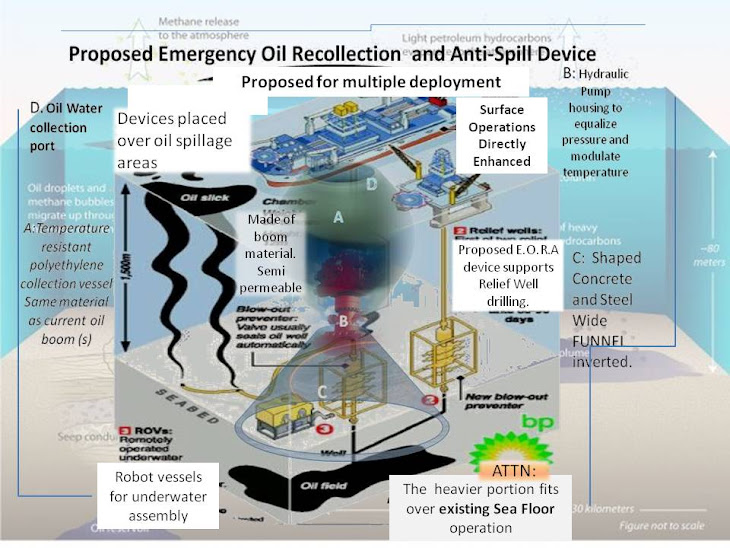
Proposed Emegency Oil Reccollection and Anti-Spill Device

Proposed Emegency Oil Reccollection and Anti-Spill Device
a proposal inspired in part by Rachel Maddow

Welcome....

this blog is about much more than politics...
...it's about the art of argument and investigation..

...making new knowledge from old..

..come in, check out some the first posts ...

let's see what happens...

A few thoughts from
Tom

Communication: Living Knowledge

Communication: Living Knowledge
a proposal (click)

About Me

My photo
ann arbor, mi, United States
This blog is about discussion: ideas of popular culture, ideas of change, ideas of knowledge: all are spoken here.

Students Today

Followers

Search This Blog

BlogCatalog

BlogCatalog

Tuesday, June 1, 2010

Towards a General Model of Thought and Behavior. Part 2: Inherentcy and The Necessity of Error in Perpsective and Illusion.

For both art and life depend wholly on the laws of
optics, on perspective and illusion; both, to be blunt, depend
on the necessity of error. (Nietzsche 10)
 Redefinition of Error
From a moral skeptic foundation (Nietzsche 1897, Richard Joyce 2001) the general concept of error as a mistake, I argue, is faulty in that the general definition does not keep on line with established philosophical traditions (Nietzsche 1897:Popper 2003).:  Error, I argue, is not mistake per se,  it is the inevitable discontinuation of momentum evident in a given system in one direction, in lieu of another.
"Synthesis therefore brings things into consciousness, making it possible for us to subsequently recognize that our consciousness exists and that there are things in it. Hume had described the result as "something betwixt unity and number," since it is paradoxically one thing and many things all at the same time."  (http://www.friesian.com/kant.htm#synthetic)  In other words, far from being a mistake, Error, I argue, is an integral part of thought and behavior.
In terms of the Second Law of Thermodynamics as further demonstration: 
If there is no net change in the state inside the isolated system then  ΔS = 0.  This then is the thermodynamic criterion for equilibrium .
Inside an isolated system, in order for a process to proceed, Δ S > 0.  Such a process is said to be spontaneous.  A process for which ΔS < 0 is called non-spontaneous and is impossible for an isolated system. (http://www.genchem.net/thermo/laws.html)
Thus, in our concept of Error , error is not necessarily a mistake.  It is in fact and consequence,  any act that alters the existing direction of continuity. As the fundamental element of inherentcy, error is the sole vehicle by which non reality becomes interpretable as that quantity we generalize as "real." 
The Argument for Inherentcy as a result of this inevitable abrogation of  Kant's concept of synthesis as well as Hegel's non confrontation of the subsequent natural asymmetry inherent in this approach lends credibility to our overall emphasis that the "necessity of error in perspective and illusion," a reworking of the Nietzschean  The Birth of Tragedy corollary, establishes, for our argument, a firm foundation for developing and discussing the implications this line of reasoning has for our larger discussion regarding the nature of a General Model of Thought and Behavior.

So, in conclusion,  we can claim, based on our reformulation of  Hegel's concept of synthesis in light of  our re-understanding of the Second law of Thermodynamics in direct relation to Asymmetric Information
(http://academicearth.org/lectures/auctions-winners-curse)
 our argument thus far implies an equilibrium which, for the purposes of our argument, involves a condition of inherent nature in a given system.
Furthermore,  that inherent condition of equilibrium, implies, not only a prevalence of inherent error in a given system, but that inherentcy of error is also necessary according to the Second law of Thermodynamics.
Moreover, this inherentcy of error, as a discontinuation of established course of action, is a natural and necessary occurrence in an overall understanding of a coherence in a given system.

In addition, our Nietzschean claim of there being a Necessity of Error in Perspective and Illusion also implies that, in relation to our previous assertions on this idea, that the formulation of Subject as Entity, is indeed a workable and tenable point from which we can further develop the discussion of Subject and Object Interposition,
That;s enough for now, We'll pick up the discussion at that point in then next post.
Thank you, and have a good Holidays.

Tom
Ann Arbor.

Sunday, May 30, 2010

Towards A General Model of Thought and Behavior from Subject Object Interposition to Hiearchical Text and Integration of Perspective and Illusion: a Resolution of Meaning and Mind. Part One: That Which is Inherent.

A.
 All life, organic and inorganic is the joint, direct and inverse result of its own inherent system of control. Control, as we generally understand the term is not always about dominance of weak over strong, good versus evil or sense versus nonsense. Control used in the context of this discussion refers to the range of expression from energy or matter interposition to the hierarchical text of energy and matter integration in terms of perspective and illusion.
Control, thus originates as that capacity which is inherent in a given system.

2.12 A picture is a model of reality.
2.141 A picture is a fact.
2.172 A picture cannot depict its pictorial form: it displays it.
2.19 Logical pictures can depict the world.  (Ludwig Wittgenstein---Tractatus Logico-Philosphicus)
The Picture Wittgenstein describes later in his Philosophical Investigations (http://www.scribd.com/doc/2916793)
as the "essence of human language." (9) is indeed a profound and brilliant statement that he successfully develops and defends throughout his later arguments. Yet, I argue we can further.

Getting back to our first statement regarding control, in my work thus far I have maintained that all thought and behavior is a fundamental result of subject object integration primarily: that which is, in joint, direct and inverse relation to that which is not when both capacities are bound by a third element neither one is, yet both contain.
For example (-1 0 1) describes just such a basic system. Both -1 and 1 are bound by the 0, yet since neither  number over 0 is defined, while 0 over either is, the statement, therefore is true.

However, the implications of this picture as a fundamental model of  an inherent reality are not clear until we apply the Zeroth Law of Thermodynamics which states that:
...if two objects, objects a and b, are both in thermal equilibrium with object c, then objects a and b are in thermal equilibrium with each other. This law is analogous to the basic rule in algebra that if a=c and b=c, then a=b.
In other words, for any given system, inherency of that system as "first order control" exists as a result of an exchange of energy, in this case: an exchange of heat energy. Although all human beings do not share the same body temperature, we do share the same range of heat index. In fact, all matter and energy essentially exists and  non exists in relative degrees of heat. Heat and the exchange of heat, therefore, is the most basic form of language there is.

To clarify the above picture sentence further, the zeroth law also implies that since, a field is defined as any given three points in a plane that share at least one common vertice,  and according to the Second Thermodynamic Law corollary of deforming potential, not only do we exchange the energy of heat as our universal currency, we form relationships, navigate our way around and through problems, live, laugh and dream  based on what we realize we give up as much as on what we believe we gain.
Language as we generally understand the term to mean is more than a tool we use to record our non verbal experiences of this initial exchange of heat energy. The system of language is how we control the variability of inherent control first facilitated by the exchange of heat energy relative to all our life processes.
Wittgenstein was basically right in his assertion regarding the importance of language to our general understanding of meaning. But in resolving the issues of meaning and of mind, I argue that the basic exchange of energy and matter which first governs our biological processes, is also a language we all speak fluently whether  we use words or not.

Yet, having said all of this the question remains: does an understanding of Inherentcy resolve the fundamental rift between "meaning" and "mind?"

Probably not, but it is a start

In upcoming posts we will explore the resolutions to that question in depth.
Thank you and enjoy your holidays.


A Few Words from
Tom K
Ann Arbor
from this side...

My Blog List

BlogCatalog

BBC News | News Front Page | World Edition